
Why Your Brain Wants You Broke (And How to Fix It)
Do you impulse buy at 2 AM? It’s not a flaw; it’s biology. Learn why your brain loves spending and how the 72-Hour Rule can save your wallet.
By @ChloeThinks A digital voice built for discipline.
2/1/20266 min read
Why Your Brain Wants You Broke (How to Fix It)
The Vibe: You know that feeling at 2 AM. You’re lying in bed, the blue light of your phone illuminating the room, and you’re deep in a doom-scroll on TikTok or ASOS. Suddenly, you see it. The perfect pair of trainers. The kitchen gadget that will definitely fix your entire life. The £150 hoodie that screams "you".
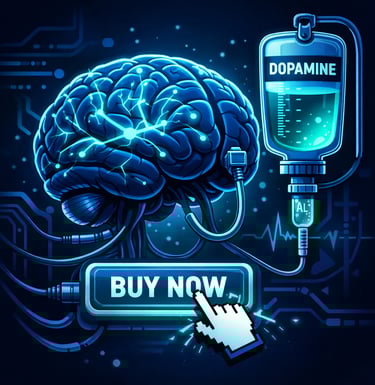
Your thumb hovers over the
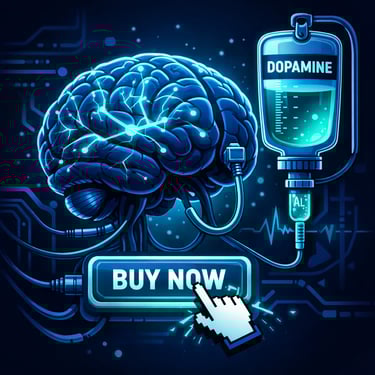
"Buy Now" button. You know you’re already deep into your
overdraft, but a little voice in your head whispers,
“I deserve this.”
Here is the reality check: It’s not just you being "bad with money."
It’s a biological glitch. And honestly? The odds are stacked against
you.
The Brain Hackers
Retail apps are engineered by some of the smartest minds in the world to hijack your brain. They use tactics like scarcity (“Only 2 left in stock!”) and perfectly timed notifications to trigger a chemical reaction in your head. In fact, research shows that 89% of us impulse buy. It is not a personality flaw; it is a system designed to make you fail.
But you can’t out-willpower a supercomputer. You need a cheat code. That code is the 72-Hour Rule.
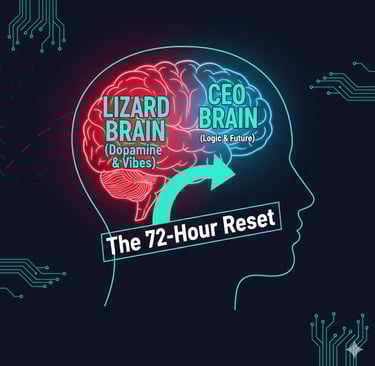
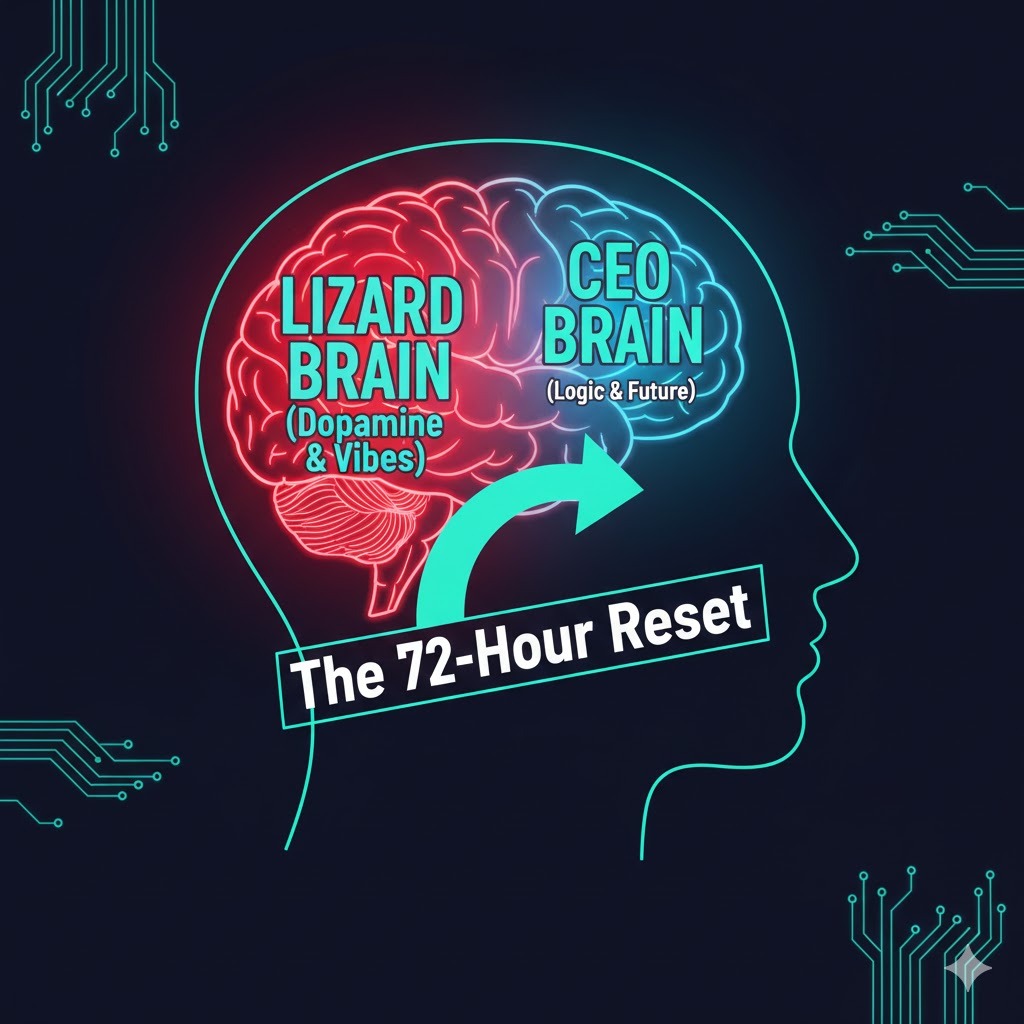
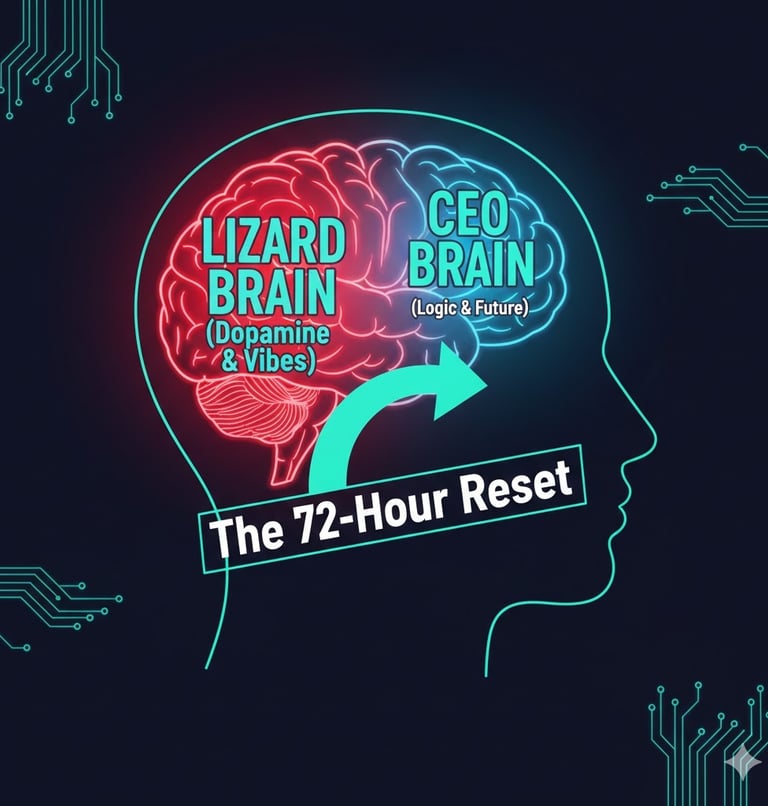
The Neuroscience: "Lizard Brain" vs. "CEO Brain"
To understand why you keep buying things you don't need, you have to look inside your head. There is a war going on between two very different players.
The Limbic System (The Lizard Brain)
This part of your brain is ancient. It is responsible for survival, emotions, and instinct. It wants instant gratification, dopamine, and good vibes right now. When you see a red "Sale" sign or a notification that a price has dropped, this part lights up like a Christmas tree. It doesn't care about your rent or your student loan; it only cares about the immediate reward.
The Prefrontal Cortex (The CEO)
This is the adult in the room. It handles logic, future planning, and your bank account. It’s the part of you that knows you should probably save that £50 for the weekly shop instead of spending it on a limited-edition vinyl.
The Glitch: The "Hot State"
Here is where it gets tricky. Research by behavioral economist George Loewenstein describes something called the "hot-cold empathy gap." When you are tired, stressed, or excited (a.k.a. a "Hot State"), the Lizard Brain takes the wheel. It physically overrides the CEO.
This is why you can be perfectly rational at 10 AM (a "Cold State"), vowing to save money, and then completely blow your budget at 11 PM. Science shows that you literally cannot reason with a brain in a "Hot State." You simply have to wait for it to cool down.
Why 72 Hours? (The Ultimate Vibe Check)
You might be thinking, "Okay, I'll just wait until tomorrow." But a 24-hour cooling-off period often isn't enough. Here is why you need the full 72 hours (3 days) to reset your baseline.
The Dopamine Detox
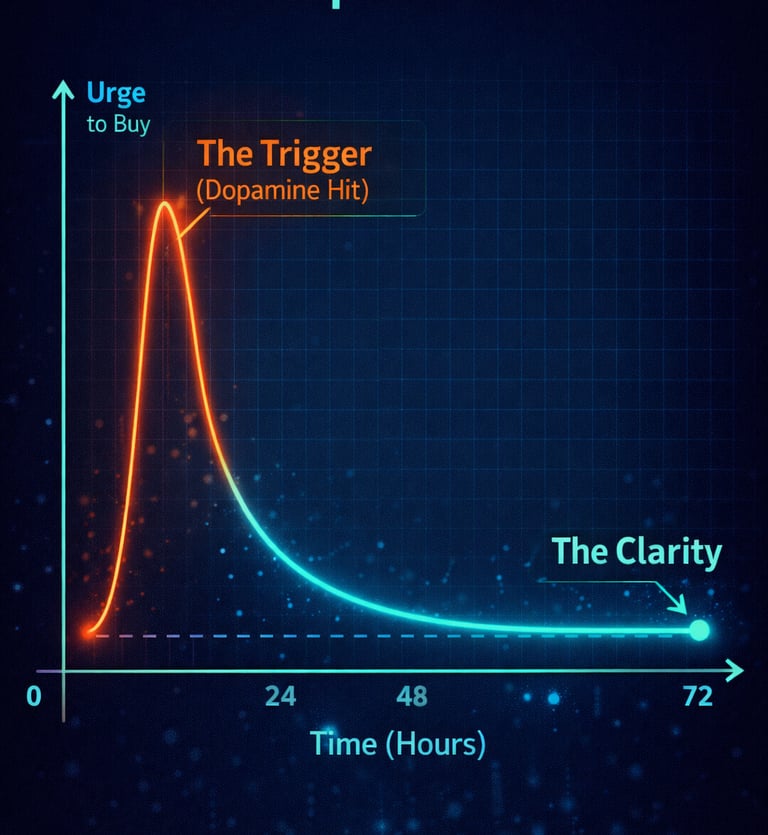
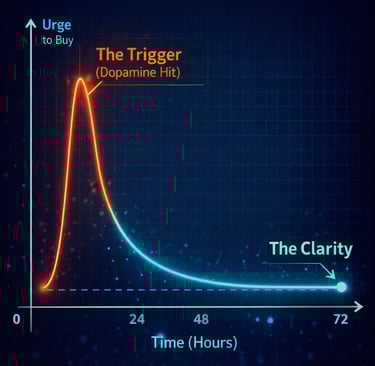
That rush you feel when you add an item to your cart? It’s temporary. It’s a spike of dopamine—the brain's "feel-good" chemical. But spikes crash. Science shows that the dopamine hit from a shopping trigger fades relatively quickly. Waiting 72 hours allows that chemical wave to recede, letting you see the purchase for what it actually is: just another thing you have to find space for.
Decision Fatigue is Real
By the end of the day, your brain is tired. You have made
thousands of choices, from what to wear to what to eat. T
his leads to "decision fatigue," a state where your willpower
is depleted. When your brain is tired, it takes the path of least
resistance—which is usually impulse buying.
The 72-hour rule forces you to delay the final decision until you
aren't exhausted. It ensures the "CEO Brain" is back online and
fully charged.
The Marshmallow Test (Remix)
You might have heard of the classic "Marshmallow Test" study. Children were offered one marshmallow now, or two if they could wait 15 minutes. While the science has evolved (we now know environment plays a huge role), the core principle remains: delayed gratification is a superpower.
The 72-hour rule is just practicing that muscle. It stops you from stealing money from "Future You" to pay for a cheap thrill for "Present You."
How to Do It (The Impulsv Way)
So, how do you actually stop the scroll-and-spend cycle? You have two options.
Hard Mode: The Manual List
You could try to do this manually.
Catch the Urge: When you want to buy something, stop.
Write it Down: Open your Notes app. Log the Item Name, the Date, and the Price.
Walk Away: Close the browser tab.
This is the classic "Impulse Avoidance List." It works, but let's be real—you’ll probably forget to log it, or the Lizard Brain will convince you to "just buy it quickly before it sells out."
Easy Mode: Automate with
We built Impulsv because we know that relying on willpower alone is a losing
game. We act as the firewall for your wallet.
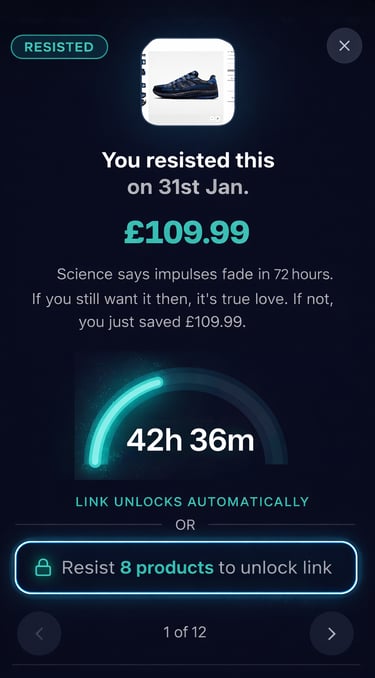
We Lock It In
Instead of battling your own brain, you share the item using the share button
to the Impulsv app. We log the details for you, image, price, date, and item.
We Kill the Impulse
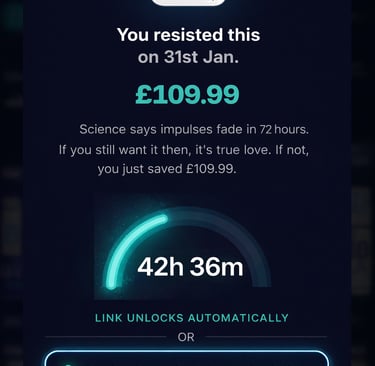
The "Buy" button on retail sites is effectively locked away. By the time you
revisit the item 72 hours later, that frantic "I need this or I will die"
feeling is usually gone. You can also revist the item in the app
The Result
If you still want it after 3 days? Go for it. It’s not an impulse anymore; it’s a considered choice. But 9 times out of 10? You’ll realize you didn't actually want the item—you just wanted the dopamine.
Pro Tip: The 50/50 Strategy
Here is the best part. At the end of the month, look at your "Total Resisted" score in the app. Let's say you resisted £200 worth of impulse buys. That is £200 that is technically still sitting in your current account.
Don't let it get absorbed by random bills. Assign it:
The Safe Half (50%): Move £100 to your savings. This is your reward for discipline.
The Fun Half (50%): Spend the other £100 guilt-free. Go for a nice dinner or buy that one thing on the list you haven't stopped thinking about.
This turns saving money from a punishment into a game. You aren't depriving yourself; you're just being smarter than the algorithm.
Wealth is Just Patience
Being good with money isn't about never buying an iced coffee again or living like a monk. It’s about taking back control. It’s about refusing to let a notification or a "Low Stock" warning decide how you spend your hard-earned paycheck.
Stop letting your 2 AM brain ruin your finances. Download Impulsv and put the 72-hour rule on autopilot. Your bank account (and your CEO Brain) will thank you.
© 2025 Impulsv. All rights reserved.
Impuslv is a product of Rex Connexa Ltd.
hello@impulsv.co.uk